
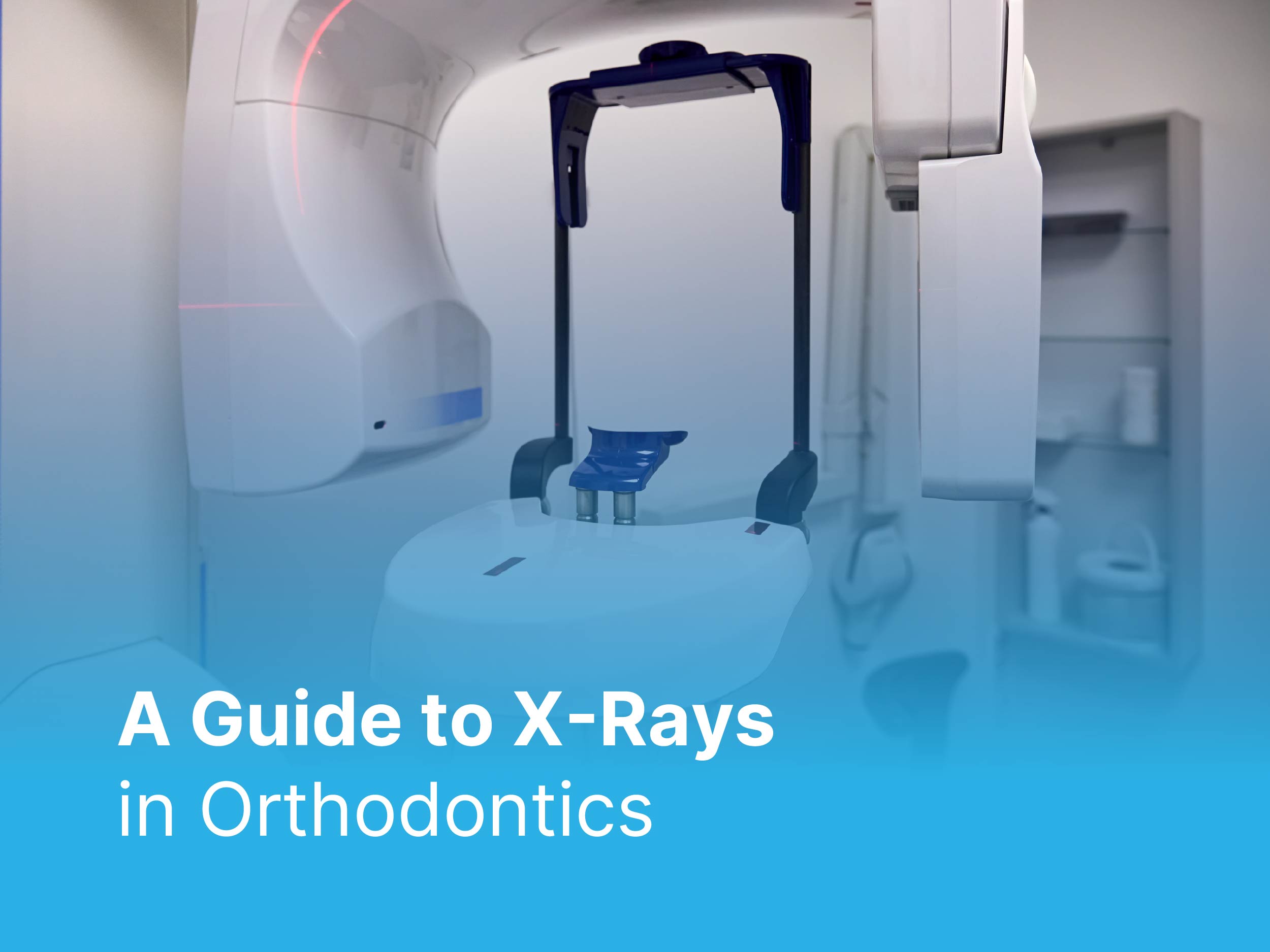
Your orthodontist can learn a lot by examining your teeth and bite, but some important details are hidden below the surface. X-rays provide a closer look at the teeth, roots, and jaws to help your orthodontist understand how your smile is developing.
Whether you are preparing for braces, considering Invisalign, or bringing your child in for an evaluation, understanding why X-rays may be recommended can help you feel more prepared.
Why Do Orthodontists Take X-Rays?
Depending on the patient, orthodontic X-rays may help the orthodontist:
- See permanent teeth that have not come in yet
- Identify missing, extra, or impacted teeth
- Evaluate the position and shape of tooth roots
- Assess jaw growth and the relationship between the upper and lower jaws
- Look for concerns that could affect orthodontic treatment
- Plan tooth movement and monitor changes over time
The information from these images works together with the clinical exam, photographs, health history, and other orthodontic records to guide treatment recommendations.
What Types of X-Rays are Used in Orthodontics?
Different X-rays provide different views of the teeth and jaws. Your orthodontist will recommend the images that provide the information needed for your care.
- Panoramic X-rays provide a broad view of the teeth, roots, and jaws in one image. They can help the orthodontist see developing, missing, extra, or impacted teeth.
- Cephalometric X-rays show a side view of the head. This allows the orthodontist to evaluate how the teeth and jaws relate to each other and the rest of the face.
- Intraoral X-rays provide a closer look at specific teeth, roots, and the surrounding bone.
- 3D imaging, also known as cone beam computed tomography (CBCT), creates a detailed view of the teeth, roots, jaws, and surrounding structures. It may be recommended when the orthodontist needs more information than a standard X-ray provides.
When are X-Rays Taken During Orthodontic Treatment?
X-rays may be recommended at different points depending on the patient’s age, development, and treatment needs.
Before treatment, X-rays can help the orthodontist understand how the teeth and jaws are positioned and develop a personalized treatment plan. During treatment, updated images may be used to monitor tooth development, root position, or progress. Near the end of treatment, imaging may help the orthodontist review the final positions of the teeth and roots.
What to Expect During an Orthodontic X-Ray
The process depends on the type of image being taken, but most orthodontic X-rays are completed quickly.
- You may be asked to remove glasses, jewelry, or other metal items near your head and neck.
- A team member will help you get into position. For some images, a small sensor is placed inside your mouth.
- You will need to stay still for a few seconds while the image is taken.
- Depending on the image being taken, the machine may move around your head.
Taking an X-ray should not hurt. If you are uncomfortable or have trouble remaining in position, let the team know so they can help.
Frequently Asked Questions About Orthodontic X-Rays
Can my orthodontist use X-rays from my dentist?
Possibly. If the images are recent, clear, and show the areas your orthodontist needs to evaluate, they may provide some of the necessary information. Your orthodontist may still recommend another image if a different view or updated information is needed.
Are X-rays the same as digital scans and photographs?
No. Photographs show the appearance of the teeth, smile, and face, while a digital scan creates a model of the surfaces of the teeth and bite. X-rays show the roots, developing teeth, bone, and other structures below the surface. These records work together to help the orthodontist understand your smile.
Will braces interfere with an orthodontic X-ray?
Braces will appear on an X-ray, but they do not usually prevent the orthodontist from reviewing the areas that need to be evaluated.
A Clearer View of Your Smile
X-rays are one part of creating a treatment plan based on your individual needs. Along with an exam and other orthodontic records, they help your orthodontist make informed recommendations for your smile.
Schedule a consultation with Smiles by Lorino Orthodontics to learn more about what may be recommended during your orthodontic treatment.
